When it comes to installing interior lighting — whether in a home, a retail space, or within a manufacturing plant — there are common guiding principles, but each setting (industrial, commercial, residential) carries its own unique concerns. As a local Green Bay contractor, Metzler Electric Inc. (serving residential, commercial and industrial clients) is well-positioned to guide you through these distinct needs.
Below is a breakdown of key factors to consider when installing interior lighting — each factor scoped through three lenses (industrial, commercial, residential) — and how a contractor like Metzler Electric can help ensure the job is done right.
- Understand the Function & Purpose of the Space
Industrial
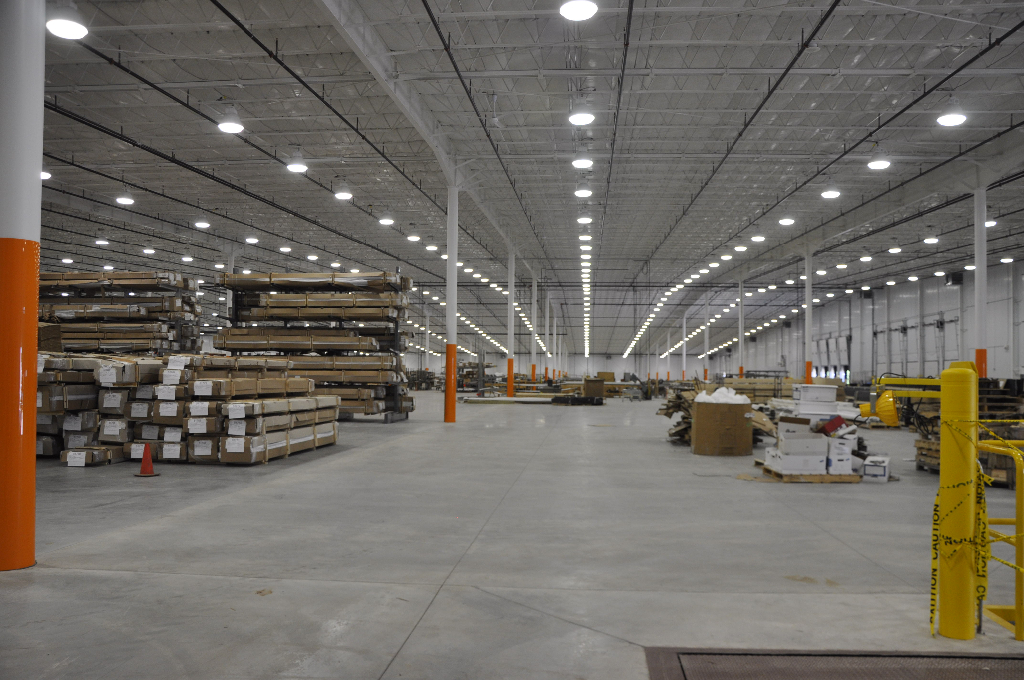
In an industrial facility (for example a factory or warehouse) lighting must support heavy-duty operations: machine work, material handling, safety inspections, maintenance, etc.
Lighting must:
- Provide high uniformity and sufficient illuminance (lux/foot-candles) so workers can clearly and safely see tasks.
- Minimize glare, shadows, and flicker (which can cause fatigue or mis-reads).
- Withstand industrial environments (dust, vibration, temperature fluctuations).
- Tie into broader systems (emergency lighting, machine-shutdown zones, maintenance schedules).
Commercial
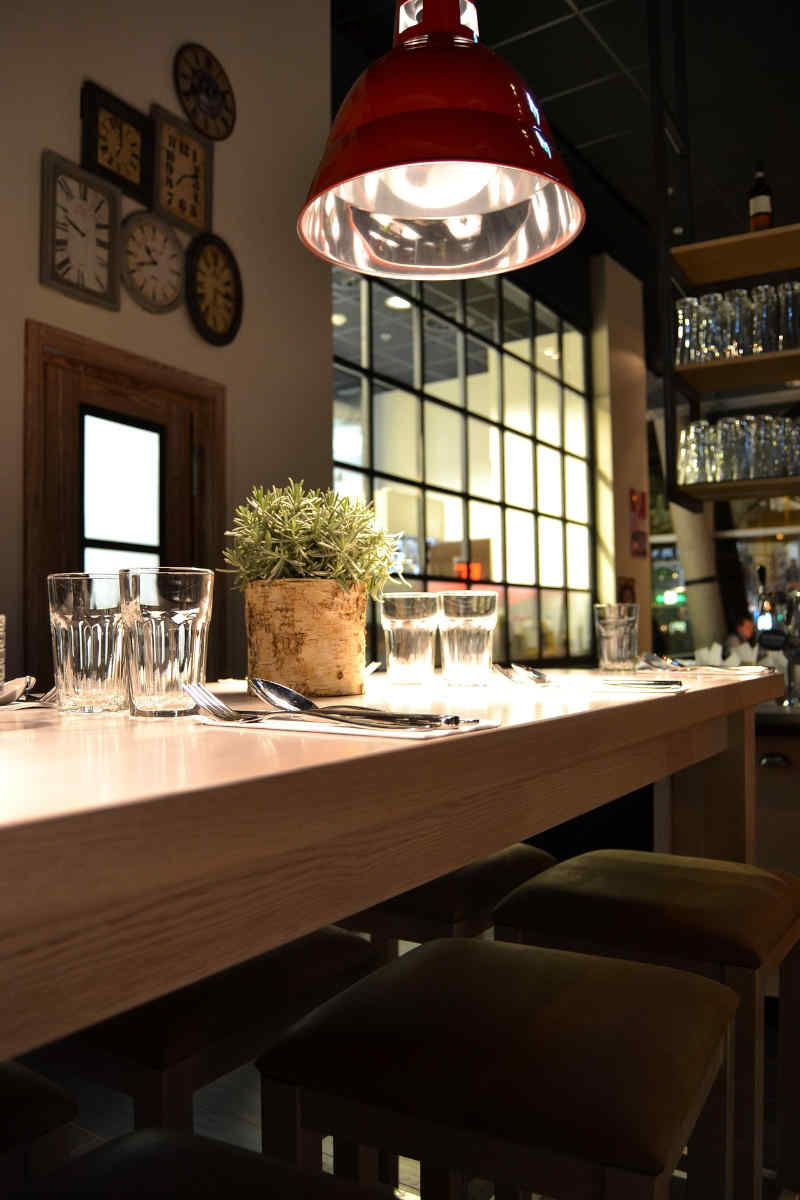
In commercial spaces such as offices, retail shops, restaurants or parking garages, lighting must balance aesthetics, functionality, and energy efficiency.
Key considerations:
- Layering of lighting: ambient (general), task (workstations, displays) and accent (architectural or product features).
- Color temperature and color rendering (CRI) matter for retail or hospitality to make merchandise/space look its best.
- Control systems: dimming, occupancy sensors, daylight harvesting to drive energy savings.
- Maintenance access and flexibility: as tenant uses change, lighting may need reconfiguration.
Residential
In homes, lighting is about comfort, mood, safety, and lifestyle.
Key items for home lighting:
- Considering how rooms will be used (e.g., kitchen prep vs. dining vs. relaxing).
- Selecting appropriate color temperature (warm for living areas, cooler for task zones).
- Layering light and incorporating dimmers, accent lights, under-cabinet lighting, etc.
- Ensuring safe installation: adequate circuits, correct fixture ratings, proper switch placement.
Why this matters: Starting with a clear picture of “what the space is for” avoids poor outcomes (e.g., too bright, too dim, wrong color, high glare, insufficient flexibility). Metzler Electric’s experience across all three sectors means we can apply best practices that are tailored to the use-case.
- Code, Safety & Maintenance Requirements
Industrial
- Compliance with codes (e.g., National Electrical Code or NEC, OSHA standards for arc-flash, safe access) is non-negotiable. Metzler Electric’s field employees are “kept up to date on all OSHA safety standards … proper arc flash clothing … well maintained safety harness for protection from fall hazards.”
- Lighting installed near heavy equipment must consider machine-clearance, dust/chemical protection (e.g., IP ratings), explosion-proof fixtures if applicable, vibration mounting.
- Maintenance: High ceilings, industrial zones often costly to service, so spec durable fixtures, long-life LEDs, easy access or suspended maintenance platforms.
- Emergency/backup lighting: In manufacturing environments, power loss can stop production or cause hazards — lighting systems may need redundancy or tie-in to emergency power systems (which Metzler also provides).
Commercial
- Must comply with NEC and local jurisdictional codes (branch circuits, derating, occupancy sensor rules, exit/emergency lighting).
- Fire/life‐safety integration: exit signs, photoluminescent paths, emergency egress lighting.
- Maintenance and lifecycle: Choose fixtures with accessible lamps/LED modules; for large commercial installs, minimize downtime.
- Energy codes: Many commercial jurisdictions require lighting power density thresholds, controls (occupancy, daylight), and metering/monitoring. Metzler’s mention of “lighting energy audits and retrofits” in commercial work speaks to this.
Residential
- For homes, NEC still applies—but typical concerns include correct fixture rating (especially if installed in insulated ceilings or damp locations), proper switch and outlet placement, GFCI/AFCI protection as required.
- Safety: Ensuring homeowner uses licensed electrician (Metzler is licensed and well-reviewed). (Angi)
- Maintenance: Use long‐life LED fixtures to reduce homeowner maintenance burden; place switches and dimmers in accessible locations; consider future changes (e.g., smart lighting upgrades).
Why this matters: Every lighting install intersects with code and safety—and overlooking these can cause failures, hazards, or expensive retrofits. Metzer Electric’s years of experience in all sectors reduces risk.
- Fixture Selection, Light Levels & Color Quality
Industrial
- Light levels (illuminance) must meet task requirements: e.g., assembly, inspection, general storage. Over-lighting wastes energy; under-lighting risks safety.
- Color temperature: Usually cooler (4000 K–5000 K) in industrial settings to maximize alertness and contrast.
- CRI (color rendering) may be less critical than in retail but still matters for inspection tasks.
- Fixtures should be durable — LED high bays, vapor-tight housings, rugged drivers; and compatible with high ceilings and long throw distances.
- Consider controls: for example, grouping lighting by zones, using occupancy sensors in less-used zones (storage aisles) to save energy.
Commercial
- Fixture style often has architectural/branding implications (e.g., high-end retail vs. value retail).
- Color temperature: For many commercial interiors, 3000 K–3500 K gives warm inviting light; 3500 K–4000 K may be used in modern offices.
- CRI: For retail especially, CRI 90+ preferred so merchandise appears vibrant.
- Light levels: Office workstations may require 300–500 lux; retail display areas higher; circulation/lobbies lower.
- Controls: Dimming, occupancy/motion sensors, daylight harvesting near windows, zonal control for after-hours.
- Fixture selection: sometimes drop ceilings, sometimes open ceiling loft style — the lighting design and mounting vary accordingly.
Residential
- Color temperature: Typically 2700 K–3000 K for living/dining to create warmth; 3000 K–3500 K for kitchens/bathrooms.
- CRI: While less critical than in retail, for color accuracy (artwork, decor) higher CRI is better.
- Light levels: Consider comfort as much as task. Living room general lighting lower; kitchen prep areas higher (400 lux or more).
- Fixtures: Ambient ceiling fixtures, recessed cans (though consider insulation contact rating), under-cabinet lighting, wall sconces, accent lights.
- Controls: Dimmers almost always recommended; possibly smart switches, scenes, accent circuits.
Why this matters: Choosing the wrong fixture type, color temperature or light level can lead to spaces that feel “off” (too cold, too yellow, too bright, too dark) or that cost too much to operate. Working with a contractor like Metzler who covers lighting design & installation means clients have help with these choices.
- Energy Efficiency, Lifecycle & Sustainability
Industrial
- Energy cost in industrial settings is large; lighting retrofit to LED and controls can yield major savings. Metzler lists “lighting energy audits and retrofits” under their commercial services, and similar logic holds in industrial work. (Metzler Electric)
- Consider lifecycle cost: higher upfront cost for better driver, higher efficiency, longer life (50,000+ hours) — so maintenance downtime is reduced.
- Controls: Daylight sensors (in large windows/skylights), occupancy sensors, zone shut‐offs during non‐production hours.
- Integration with power systems: For example, if facility has UPS or generator backup, lighting load planning may be needed. Metzler notes UPS systems for industrial.
Commercial
- Many commercial clients have energy budgets and may be eligible for rebates or incentives for LED lighting upgrades.
- Controls and smart lighting: Building owners/tenants often expect “smart” or building-automation level lighting (scheduling, occupancy zones, daylight dimming).
- Retrofit versus new builds: Older commercial buildings might have inefficient lighting (T12 fluorescents, HID high bays) — a proper lighting upgrade can bring significant ROI.
- Maintenance and replacement: Lower operating wattage, fewer lamp replacements, less labor over time.
Residential
- Homeowners increasingly expect energy savings: LED lighting, smart dimmers, home automation.
- Choice of fixtures: Long‐life LEDs reduce need for changing bulbs in high/awkward ceilings.
- Control: Automated dimming, daylight/motion sensing, smart home integration (voice control, scenes).
- Environmental/sustainability: Lower power use leads to lower bills and smaller carbon footprint, which many homeowners value.
Why this matters: Lighting is not just about “making things look good”; it’s a recurring cost and maintenance burden. By factoring energy/lifecycle early, you make smart long-term decisions. Metzler Electric’s emphasis on retrofit and energy audits means clients get that value.
- Wiring, Circuit Design & Switch/Control Layout
Industrial
- Large lighting loads must be correctly designed: proper conductors, feeder circuits, overcurrent protection, segregation from machine power if required.
- Switchgear, centralized lighting panels, group wiring, possibly high‐bay lighting circuits, emergency lighting circuits, maintenance bypass.
- Control wiring for occupancy sensors, daylight sensors, time clocks, or building management integration.
- Planning for future expansions or re-layout of machinery (so lighting circuits are reusable).
- Ensuring all labeling, access, safe service conditions (lock-out/tag-out) and compliance with NEC and facility safety protocols.
Commercial
- Circuiting should be aligned with zones: e.g., lighting in a display zone, back‐office zone, corridor. Switches should be placed logically for occupancy and control.
- Use of low-voltage control wiring (for smart lighting), occupancy/daylight sensors wired correctly.
- Integration of emergency lighting circuits and exit signage.
- Future‐proofing: designing wiring pathways and control systems so that tenant changes or re-tenanting is easier.
- Proper labeling, metering or monitoring where required by code or building management systems.
Residential
- Design of branch circuits considering lighting loads, switch location, dimmers, and code requirements.
- Use of the correct gauge conductor, proper box sizing, fixture rating, ground/neutral requirements, AFCI/GFCI when required.
- Thoughtful switch layout: multiple switches in one location, three-way/four-way switches for larger rooms, dimmers.
- Planning for smart switches/outlets and future home automation upgrades.
- Possibly integrating lighting with other systems (e.g., integrated audio/video, security, home automation) — Metzler lists home automation among their residential services.
Why this matters: Good lighting is only as reliable as the wiring and control structure behind it. Cutting corners early on creates future headaches (e.g., circuits overloaded, flickering, difficult to change). Partnering with a proven electrician like Metzler helps avoid those pitfalls.
- Budgeting, Project Phasing & Maintenance Planning
Industrial
- Industrial lighting projects can be large and expensive — budgeting should factor in fixture cost, controls, installation labor, scaffolding/hoist equipment, shutdowns or production scheduling.
- Phasing: For a large facility, you might install lighting zone by zone to avoid full production stop. Metzler’s industrial practice emphasises “understand your electrical needs and how to best serve them” upfront.
- Maintenance planning: Remove or minimize need for frequent lamp changes/lift-equipment usage; plan for future re-layout of fixtures or controls.
Commercial
- Budget includes not just fixtures, but design (lighting layout), controls, automation, ceiling modifications, reinstatement of finishes.
- ROI: Energy savings, maintenance reduction, better lighting quality (which may increase sales/customer satisfaction in retail). Show clients the pay‐back.
- Retrofits may involve minimal disruption vs new‐build jobs—coordinate installation to off‐hours if needed.
Residential
- Homeowners want cost-effective solutions that balance aesthetics and function. Provide them options (budget vs premium LED fixtures, smart controls).
- Consider hidden costs: wiring upgrades, switch repositioning, dimmer compatibility, fixture height/ceiling work.
- Maintenance: Choose long-life LED and fixtures that reduce need for changing bulbs in hard-to-reach places.
- Clear timeline and expectation setting: Metzler’s residential approach emphasizes sitting down with the homeowner to “go over the details of your new home” or retrofit work.
Why this matters: Lighting projects are often more than “just install some fixtures” — factoring in the broader budget, timeline, and maintenance ensures a smooth outcome. Metzler Electric’s full-service approach across sectors helps manage this.
- Collaboration & Design Considerations
All three sectors benefit from early involvement of lighting design considerations and collaboration among stakeholders.
- For industrial/commercial sectors: early design phase engagement (architects, electrical contractors, lighting designers) to ensure optimal fixture placement, daylight harvesting strategy, control integration and coordination with HVAC/building systems. Metzler mentions working “from the early design stages of your project to the day you move into your new building and beyond.”
- In residential: discussion about lifestyle, room use, future flexibility (e.g., “What do you want your home to feel like in 5–10 years?”).
- In all settings: Accessibility for maintenance, future changes (tenant changes, process changes, add-ons) should be considered. Metzler’s mention of retrofit services demonstrates this forward thinking.
- Communication: Clear specifications, fixture schedules, control logic diagrams, and budget transparency.
Why this matters: Installing lighting isn’t just about hanging lights and flipping switches — it’s about thoughtful integration into the space, wiring infrastructure, and future plans. A contractor like Metzler who spans residential, commercial and industrial brings broad experience which can benefit each setting.
- Location-Specific Considerations (Green Bay/Wisconsin)
Since Metzler Electric operates in the Green Bay, Wisconsin area, there are local environmental and regulatory factors to keep in mind:
- Cold-climate performance: In some spaces (e.g., unheated warehouse zones, garage areas, basements) ensure fixture ratings include low-temperature operation if needed.
- Local codes and inspection: Ensure compliance with Wisconsin’s electrical code adoption and local municipal permit/inspection requirements.
- Service continuity: Wisconsin winters may challenge maintenance access; choosing long-life, durable fixtures and well-planned installation is wise.
- Energy-efficiency and utility incentives: Local utilities often offer rebates for LED lighting upgrades or lighting controls — engaging a local contractor familiar with the region like Metzler can identify these opportunities.
- Seasonal daylight variation: In northern climates the daylight hours vary more dramatically; daylight-harvesting controls should be properly tuned for that.
- Final Checklist Before Installation
Here’s a practical summary you or your electrical contractor (like Metzler Electric) should review before pulling the trigger:
- Define the space function and how lighting serves it (task, ambient, accent)
- Confirm light levels required (lux/foot-candles), color temperature and CRI desired
- Review fixture selection: durability, maintenance access, mounting height, environmental rating
- Check wiring/circuit plan: feeders, branch circuits, controls, switch layout, future expansion
- Ensure code/compliance: NEC, local code, safety measures (especially industrial)
- Confirm control strategy: dimming, occupancy sensors, daylight sensors, smart controls
- Set budget and timeline: installation phases, downtime impact (especially for commercial/industrial)
- Plan for maintenance: lamp life, driver reliability, accessibility, service path
- Coordinate design: architecture, other trades, lighting layout early in overall project
- Review regional specifics: cold-climate performance, local utility incentives, inspection/permits.
- Engage a qualified contractor: Metzler Electric in Green Bay offers residential, commercial and industrial services and can manage these variables. (Metzler Electric)
In Closing
Installing interior lighting is far more than “pick a fixture and wire it up.” Whether it’s a sprawling industrial production floor, a sleek retail showroom, or a cozy family home in Green Bay, Wisconsin, you’ll want to consider the functional purpose of each space, the code and safety implications, the fixture and control choices, the long-term maintenance and energy costs, and the wiring/design infrastructure behind it all. A contractor like Metzler Electric Inc., with decades of experience across all three sectors, provides the expertise to guide you through the specifics, avoid pitfalls, and deliver a solution that works today and tomorrow.
Image by Solomon Rodgers from Pixabay